Gorilla Trekking in Rwanda & Uganda: A Comprehensive Guide for Discerning Travellers
For travellers seeking to encounter mountain gorillas in their natural habitat, Rwanda and Uganda offer among the last remaining opportunities on Earth to do so. Whether your interest lies in Bwindi Impenetrable Forest’s ancient rainforest in Uganda or the Virunga foothills of Rwanda’s Volcanoes National Park, this guide provides the essential information required to plan a gorilla trekking experience — covering national parks, permits, trekking sectors, and optimal timing for your visit.
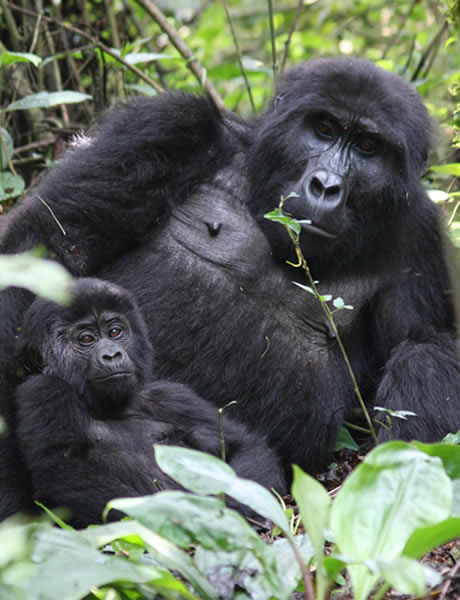
Rwanda and Uganda are home to the vast majority of the world’s remaining mountain gorillas, a subspecies once feared to be on an irreversible path to extinction before the close of the twentieth century. Through decades of sustained conservation efforts, community-based partnerships, and responsibly managed ecotourism, the population has grown from fewer than 300 individuals in the 1980s to more than 1,000 today. Undertaking a gorilla trek in Rwanda and Uganda is therefore not merely a remarkable travel experience — it represents one of the most tangible contributions a visitor can make toward the continued survival of this species.
If you’re planning to visit Rwanda, your gateway is Volcanoes National Park in the Musanze District. For those planning Bwindi gorilla trekking or exploring Uganda more broadly, gorillas are found in two protected areas: Bwindi Impenetrable National Park — Uganda’s largest and most famous gorilla habitat — and Mgahinga Gorilla National Park, which sits within the same Virunga range as Rwanda’s volcanoes and shares borders with both Rwanda and the DRC. This overlap is exactly why so many travellers now book Uganda and Rwanda gorilla tours combined, moving between both countries on a single itinerary.
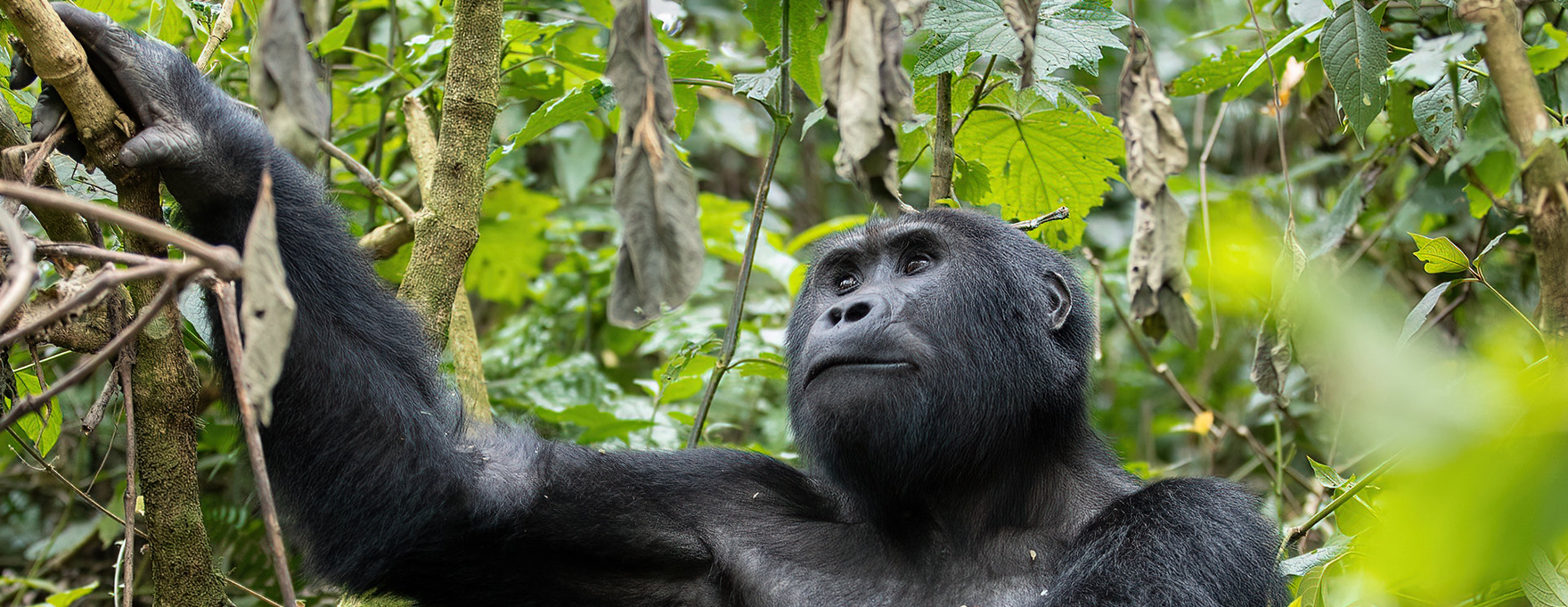
Volcanoes National Park, Rwanda – Adventure Gorilla Tours
Volcanoes National Park sits in northwest Rwanda, two to three hours from Kigali, protecting about 160 square kilometers of the Virunga range. Terrain rises from roughly 2,400 meters through bamboo forest and hagenia woodland to afro-alpine moorland at Mount Karisimbi’s 4,507-meter summit. The park is famed for Dr. Dian Fossey’s gorilla research from 1967 until her 1985 death, work that helped save mountain gorillas and inspired Gorillas in the Mist. Her Karisoke Research Centre, between Karisimbi and Bisoke, remains active, and her tomb and old camp are popular side trips for trekkers.
Rwanda manages twelve habituated gorilla families, each visited once daily by a single group of up to eight tourists under Rwanda Development Board oversight, with visits strictly limited to one hour. Trek difficulty varies: some families are under an hour’s walk from the trailhead, while others require three to five hours through dense, muddy terrain. Hiring a porter is recommended—their local knowledge helps, and fees support the community.
Volcanoes National Park offers far more than gorillas. Golden monkey trekking reveals the vivid, highly social Cercopithecus kandti, found only in the Virungas. Mount Bisoke (3,711m) rewards day hikers with a stunning crater lake, while the ambitious can attempt the two-day Mount Karisimbi summit for a serious high-altitude challenge. Rwanda’s tourism infrastructure is well developed, with luxury lodges clustered near the park, many overlooking the volcanoes. From Kigali, visitors can build a circuit combining gorilla trekking with Lake Kivu, the twin lakes Burera and Ruhondo, or the genocide memorials essential to understanding the country’s recent history.
Bwindi Impenetrable National Park, Uganda
Bwindi, in Uganda’s Kigezi Highlands near the Rwanda/DRC border, is a 331 sq km UNESCO-listed montane rainforest — dense, ancient, and true to its name. It hosts over 120 mammal species, 350+ bird species (23 Albertine Rift endemics), and roughly half the world’s remaining mountain gorillas. Unlike the more open Virunga volcanoes, Bwindi is a primary tropical forest — dark, layered, and ecologically rich- which is what makes its gorilla trekking distinct.
The park has four trekking sectors — Buhoma, Ruhija, Rushaga, and Nkuringo — each with its own trailheads, ranger stations, gorilla families, and character.
Gorilla Trekking
Uganda has more habituated gorilla families than any other country — over twenty across Bwindi’s sectors — meaning more permits and more variety than Rwanda offers. Terrain is tougher: trails are narrower and muddier than in Volcanoes National Park, with gorilla groups often deep in forest interior rather than open clearings. A walking pole and porter are essential, not optional. Treks can mean crouching under branches and pushing through tight vegetation, making encounters feel wild and unscripted.
The standard rules apply — one hour with gorillas, max eight visitors per group — but Uganda uniquely offers the Gorilla Habituation Experience (GHEX) in Rushaga: four hours with a family still being habituated, arguably the most immersive option available anywhere.
Sectors Compared
- Buhoma — oldest and most accessible, established infrastructure, shorter treks; best for first-timers.
- Ruhija — at ~2,350m, quieter and wilder, with strong birdwatching alongside gorilla trekking.
- Rushaga — largest sector, most gorilla families, home to GHEX, good lodges and road access.
- Nkuringo — dramatic ridge-top setting, likely the park’s most scenic, but with steep, demanding climbs.
Mgahinga Gorilla National Park – Adventure Gorilla Tours
Uganda’s smallest at just 33.7 km², it forms a key link in the Virunga Volcanoes ecosystem, bordering Rwanda’s Volcanoes National Park and DRC’s Virunga National Park. It shelters the slopes of three volcanoes—Muhavura, Gahinga, and Sabyinyo—covered in bamboo and hagenia forest resembling Rwanda’s terrain, with clear-day views of the peaks above Kisoro town.
Gorilla trekking focuses on one habituated troop, the Nyakagezi family, limited to eight permits daily. Because Virunga gorillas roam freely across borders, this group frequently crosses into Rwanda or DRC, occasionally leading to cancelled treks, so checking their location beforehand is wise. The park also offers golden monkey tracking and the Muhavura summit hike, a unique cross-border route into Rwanda and back—making Mgahinga National Park an ideal stop connecting Uganda and Rwanda gorilla safaris.
Getting Gorilla Permits for Adventure Gorilla Tours
Rwanda (via RDB): The Rwanda Development Board issues gorilla permits at USD 1,500 per foreign visitor — among Africa’s priciest — reflecting a low-volume, high-value strategy that limits pressure on the gorillas. Book directly through rdb.rw or an accredited operator. Given strong demand, reserve three to six months out, and earlier for June–September. Permits aren’t refundable, though date or name transfers are occasionally allowed. The fee funds rangers, community programs, and conservation efforts.
Uganda (via UWA): The Uganda Wildlife Authority sells permits for Bwindi and Mgahinga at USD 800 for foreign non-residents, USD 700 for East African Community members, and a discounted local rate for Ugandans. Purchase through ugandawildlife.org, a licensed operator, or UWA’s Kampala office, paying by card, transfer, or agent. When booking Bwindi treks, specify a preferred sector plus an alternative, since allocation is family- and sector-specific. Rushaga’s GHEX option runs USD 1,800 for a four-hour encounter, versus Rwanda’s standard one-hour visit. Reserve three to four months ahead for peak times in Buhoma and Rushaga; off-peak slots need less lead time.
Best Gorilla Safari Packages
Mountain gorillas call two ecosystems home: the Virunga Volcanoes, a chain of eight volcanoes (some extinct, some still active) spanning the borders of Rwanda, Uganda, and the Democratic Republic of Congo; and the Bwindi Impenetrable Forest in southwestern Uganda. Each landscape has its own personality, its own terrain, its own rhythm — and each offers a different kind of reward to the traveller who makes the trek. We guide gorilla adventure safaris in Rwanda’s Volcanoes National Park and then in Uganda’s Mgahinga and Bwindi Impenetrable Forest.
- 1 Day Rwanda Gorilla trekking
- 1 Day Bwindi Gorilla Safari
- 2 Days Volcanoes Gorilla Tour
- 3 Days Rwanda Gorilla Adventure
- 4 Days Double Gorilla Trekking
- 5 Days Safari to Bwindi NP
- 7 Days Rwanda & Uganda
- 8 Days best of Rwanda Safari
Best Time for Gorilla Trekking in Rwanda and Uganda – Adventure Gorilla Tours
Dry seasons (best): June–September is the long dry season and top choice — firm trails, clear visibility, ideal highland weather, and the best roads for self-drivers. It’s also peak season, so permits are scarce and lodge rates peak. December–February, the short dry season, is a solid alternative with fewer crowds and good permit availability.
Wet seasons (trade-offs): March–May, the long rains (harshest in Uganda), bring slippery, sometimes hazardous trails — but also the lushest forests, peak birdlife, and occasionally negotiable Ugandan permit prices. A high-clearance 4×4 is essential for self-drivers. October–November, the short rains, are milder and popular with experienced trekkers who prefer thinner crowds and vivid green scenery, with self-drive access still manageable given the right vehicle.
In short: June–September offers the most reliable conditions but at peak cost and crowding; December–February balances good weather with more availability; October–November suits those wanting fewer crowds and don’t mind some rain; March–May is riskiest for trails but rewards with scenery, birdlife, and potential savings in Uganda.