- admin
- June 26, 2026
- One way Car hire
Driving from Kigali to Nairobi: A One-Way Self-Drive Safari Through Uganda
Few overland journeys in Africa pack as much landscape, wildlife, and cultural texture into one route as the drive from Kigali to Nairobi through Uganda. It is the kind of trip that rewards travellers searching for self-drive tours in East Africa rather than scripted bus transfers — the freedom to pull over at a crater lake, linger at a national park gate, or detour toward a savanna plain on a whim. For anyone weighing wildlife safaris against a more conventional fly-in holiday, this corridor offers a genuine alternative: three countries, several ecosystems, and some of the continent’s most accessible game-viewing, all reachable by road.
The Route: Kigali to Kampala to Nairobi
The journey naturally splits into two driving legs. The first, from Kigali to Kampala, covers roughly 500 km and, under normal conditions with a smooth border crossing and minimal traffic, takes between 8 and 10 hours. Most drivers cross at the Katuna/Gatuna border post, the busiest and most commonly used crossing between Rwanda and Uganda, which sits on the main Kigali–Kabale–Kampala highway and is open 24 hours, with fully tarmacked roads on both sides making it the smoothest and most reliable crossing for this route.
The Rwandan side of this leg is, by most accounts, the best stretch of road on the entire trip. The road from the border to Kigali winds through the Thousand Hills on smooth, perfectly engineered tarmac, with almost no litter or potholes, through terraced hillsides that look tended by an extraordinarily patient hand. Heading the other direction out of Kigali, the drive to Volcanoes National Park is an easy two-and-a-half-hour journey through rolling green hills, tea plantations, and peaceful villages, with the Virunga Mountains growing larger on the horizon. If your itinerary allows a short detour before crossing into Uganda, it’s worth the diversion.
One detail catches almost every first-time self-driver off guard: Rwanda switched from driving on the left to the right in 2009, so the moment your front wheels cross the Rwandan border, you move to the right side of the road — not wildly disorienting, but worth a conscious mental note before departure. Rwanda also enforces speed limits rigorously, with real cameras and immediate fines, and police who are not interested in negotiation — so this is not the leg to test how fast your rental can go.
Once across into Uganda, the route runs through Kabale, then north through Mbarara — a bustling city worth stopping in for lunch and a general stretching of legs — before continuing through Masaka toward Kampala. Uganda’s road system, while larger and more varied than Rwanda’s, is also well-developed along main routes connecting major towns and parks, with roads between Kampala, Entebbe, Jinja, Mbarara, Fort Portal, and Kasese generally smooth and tarmacked, though potholes can appear unexpectedly on secondary roads, and speed bumps are common near villages, with livestock or children sometimes crossing without warning in rural areas.
The second leg, Kampala to Nairobi, is longer. This stretch heads east, typically via the Busia or Malaba border crossings, continuing through Eldoret and down to Nairobi, covering around 650 km with a journey time of 9 to 12 hours. Busia has become a genuinely efficient gateway: over the past few years, its facilities have undergone significant upgrades, transforming it into a one-stop border crossing linking Busia, Kenya, and Busia, Uganda, strategically positioned along the direct route connecting Kampala and Nairobi via Kisumu, with the full journey usually taking 12 to 13 hours depending on stopovers. Malaba, the alternative, is the second busiest crossing point between Kenya and Uganda, particularly convenient for travellers heading toward Eldoret. Both posts operate 24/7 under normal circumstances, though it’s sensible to check the current status before a late-night crossing. On the Kenyan side, the road is well paved all the way through to Kampala in the other direction, so comfort is assured provided you’ve picked the right vehicle.
Given the distances involved, most experienced overlanders treat this as a multi-day journey rather than a single marathon push — splitting the Kigali–Kampala and Kampala–Nairobi legs with a night in between, and ideally building in several days for the parks along the way.
The Safari Spots You Shouldn’t Miss
The real appeal of doing this overland rather than flying is what sits just off the highway. For travellers most interested in wildlife safaris, three Ugandan parks anchor the route, plus a worthwhile final stop in Kenya before Nairobi.
Lake Mburo National Park is the natural first stop after crossing into Uganda, sitting conveniently between Masaka and Mbarara towns, roughly 228 km and 4–5 hours from Kampala — which puts it almost directly on the Kigali–Kampala road. It’s Uganda’s most accessible savanna park for self-drivers: you can expect to see plains zebra, warthog, and the endangered Rothschild’s giraffe, along with large numbers of hippo wallowing in the lake the park is named for, and substantial buffalo herds, with leopards occasionally spotted on night drives. Of the Big Five, elephant, rhino, and lion are absent here, which is precisely why it works so well as a relaxed, low-stakes introduction to East African game viewing — no predators to worry about, easy gate access, and a lake-and-wetland landscape best appreciated from the Kazuma Lookout.
From there, most self-drive itineraries push further west to Queen Elizabeth National Park, known for its Kazinga Channel boat cruises and tree-climbing lions in the Ishasha sector, and Murchison Falls National Park in the north, where the Victoria Nile crashes through a narrow gorge before plunging into the famous falls — a boat ride upstream brings you within meters of hippos, crocodiles, and the unusual shoebill stork, with stops near the “Devil’s Cauldron” for photographs of the falls. Both require a few extra driving days off the direct Kigali–Nairobi line, but they’re the parks that turn this trip from a transit drive into a proper safari circuit, and most operators offering one-way rentals in the region structure their pricing assuming exactly this kind of detour.
On the Kenyan side, before the final push into Nairobi, Lake Nakuru National Park is worth the short diversion: not far from Nairobi, with no predators and incredible scenery, it’s an easy, uncrowded park where you can spot giraffe, zebra, hartebeest, eland, and baboons, with one of the prettiest overlooking campsites in the country. Lake Nakuru and a stopover at Lake Victoria’s shores in Kisumu — where, if you’re fortunate, you’ll catch your first hippo sighting of the trip — round out a route that, by the time you reach Nairobi, has covered savanna, wetland, rainforest fringe, and three distinct national park ecosystems.
Choosing the Right Vehicle
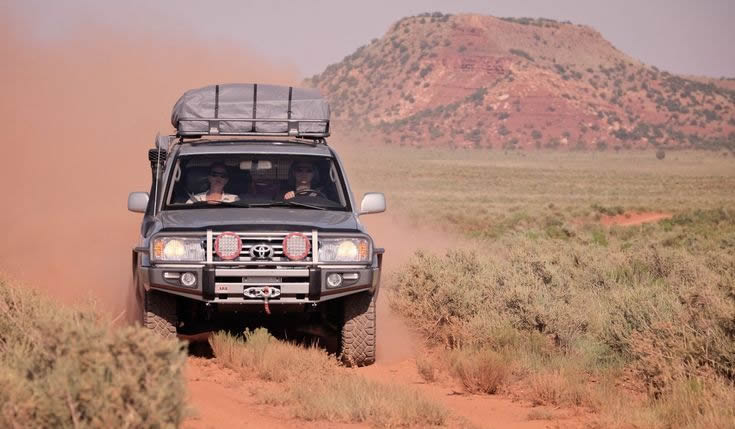
For this terrain, a robust 4×4 is non-negotiable rather than a nice-to-have. A reliable Land Cruiser — the LX 76 series or 78 series — is the standard recommendation across most regional rental operators, prized for handling everything from smooth Rwandan tarmac to rutted park-access roads in Uganda’s interior. Vehicle registration matters more than most first-time renters expect: a Uganda-registered vehicle is generally the most flexible choice, since it’s allowed to operate in several neighboring countries including Kenya and Tanzania, unlike Kenya- or Tanzania-registered vehicles, which are typically restricted to operating within their own country — and crucially, Kenyan-registered vehicles are not allowed to enter Tanzania’s national parks, just as Tanzanian vehicles cannot enter Kenya’s. If your route might extend beyond Uganda and Kenya, this detail alone can shape which rental base you choose. It’s also worth knowing, cost-wise, that renting in Uganda tends to work out cheaper for a self-drive holiday than starting in Kenya, where jeep rental rates run higher.
What to Take Into Account Before Setting Off
Documentation is where most cross-border self-drive trips succeed or fail, and it’s worth treating seriously rather than as a formality. At minimum, you’ll need: at least six months’ passport validity remaining with several blank pages, since border crossings generate stamps and a busy travel history with too few blank pages causes real delays; the East Africa Tourist Visa, a single $100 multi-entry application covering Kenya, Uganda, and Rwanda for eligible nationalities; a COMESA Yellow Card, the regional third-party vehicle insurance certificate, which your rental provider should supply; and, critically, a formal authorization letter from the vehicle’s registered owner permitting cross-border travel, since almost every rental car falls into this category and rental companies should provide this automatically. A Temporary Import Permit is also required at most East African borders for foreign-registered vehicles, issued at the border itself, though the process moves faster when you arrive with all supporting paperwork already in order.
Beyond paperwork, pack practically. Carry USD cash in small denominations, since it remains the most universally accepted currency at the borders; keep your yellow fever vaccination certificate on hand, as it’s mandatory for Uganda and Rwanda; download offline maps for all countries on the route; and pack a basic toolkit — a spare tyre is the obvious item, but a tow rope, jumper cables, and a jerry can of fuel have saved more East Africa road trippers than any travel insurance policy. Border timing matters too: the crossing process typically takes 30 to 60 minutes at quieter posts and 1 to 2 hours at busier crossings during peak hours, with early-morning arrivals significantly minimising waiting time.
Finally, budget realistically for the cross-border fee structure that comes with one-way rentals: cross-border drop-off fees typically range between USD 250 and 700 depending on distance and country, with returning a vehicle in a different country generally costing more than a same-country return. Factor this into your overall trip cost from the outset, alongside fuel — Uganda’s fuel prices run higher than Kenya’s, so it pays to top up the tank before crossing into Uganda territory — and you’ll arrive in Nairobi having completed one of East Africa’s most rewarding overland routes, with a logbook of safari sightings most fly-in visitors never get the chance to collect.
Self-drive car hire has become a popular way to explore Rwanda and Uganda, prized for their compact size, good tarmac roads on main routes, and dramatic scenery ranging from volcanoes to savanna.
Vehicle choice: A 4×4 (Toyota RAV4, Land Cruiser Prado, or Rav4-style SUV) is essential once you leave paved roads — national parks like Akagera, Bwindi, Queen Elizabeth, and Volcanoes National Park have rough, muddy, or steep tracks, especially in rainy season. Rental companies in Kigali and Kampala/Entebbe typically offer both self-drive and driver-guide options, with rates varying by vehicle size, season, and whether a rooftop tent or camping gear is included.
Cross-border considerations: Driving your own rental between Rwanda and Uganda is possible but requires planning:
- Confirm the rental company permits cross-border travel (many require prior written authorization and charge an extra fee)
- Carry the vehicle’s logbook, insurance documents (COMESA yellow card for regional third-party insurance), and your passport/visa
- The East African Tourist Visa (covering Rwanda, Uganda, and Kenya) simplifies entry if you’re visiting multiple countries
- Border crossings like Gatuna/Katuna or Cyanika are common routes between the two countries
Gorilla trekking logistics: Self-drive works well for reaching Volcanoes National Park (Rwanda) or Bwindi Impenetrable Forest (Uganda), but permits must be booked well in advance directly through Rwanda Development Board or Uganda Wildlife Authority, or via a tour operator, since availability is limited and prices are high. Roads to trekking headquarters can be steep and rutted, so a sturdy 4×4 with good clearance is recommended, particularly around Bwindi’s sectors.
Practical tips: Always carry extra fuel and cash for remote areas, download offline maps, and check park entry fees and vehicle permits separately from gorilla trekking permits, as these are billed independently.