- admin
- April 19, 2026
- 4x4 Car hire & Driver
Long term Car Rentals
Disadvantages of Long-Term Car Rental for Self-Drive Safaris in Rwanda and Uganda – You Should Know Before Booking
By a Safari Travel Expert | East Africa Wildlife & Adventure Travel
Planning a self-drive safari through Rwanda and Uganda is an exciting prospect — navigating misty volcanic mountains, tracking mountain gorillas in Bwindi Impenetrable National Park, and cruising the shores of Lake Mburo on your own schedule. The freedom of a self-guided wildlife road trip in East Africa is genuinely intoxicating. Many first-time visitors, drawn by the idea of total autonomy, default to long-term car rental as their preferred mode of travel.
But here is the critical conversation that too few safari travel blogs are having: long-term car rental for self-drive safaris in Rwanda and Uganda comes with significant, often underestimated disadvantages that can turn a dream safari into a logistical nightmare. Before you sign that extended rental agreement, read every point below carefully.
1. Escalating Costs That Eat Into Your Safari Budget
The most common misconception among travellers planning an affordable self-drive safari in Uganda and Rwanda is that long-term car rental automatically translates to cost savings. On paper, daily rental rates drop with extended bookings — but the full picture is far more expensive.
Long-term vehicle rentals in Rwanda and Uganda attract compounding charges that tourists rarely anticipate. These include daily mileage limits with steep overage fees (most rental contracts cap at 150–200 km per day, woefully inadequate for routes spanning Kigali to Volcanoes National Park, then on to Bwindi or Queen Elizabeth National Park). Cross-border transit fees, park-specific vehicle permits, and mandatory comprehensive insurance for national park zones all pile up quickly.
Worst of all, many rental companies require a substantial security deposit — often between USD $1,000 and $1500 — which ties up your travel funds for the entire rental duration. When you compare a long-term 4WD rental for a self-drive Uganda safari against hiring an experienced local driver-guide with a vehicle included, the price gap narrows dramatically and often reverses entirely once all hidden costs are factored in.
2. Vehicle Reliability Risks on Remote Safari Terrain
Rwanda and Uganda are not countries where you can casually pull over at a roadside garage if something goes wrong. The best self-drive safari routes in Uganda — through Kidepo Valley National Park, Murchison Falls, or Kibale Forest — pass through extraordinarily remote territory where mobile network coverage is patchy at best and non-existent at worst.
Long-term rentals, by their very nature, involve vehicles that accumulate significant wear over time. The longer the rental period, the greater the odds that you will be driving the vehicle past routine service intervals. Rental companies rarely prioritise proactive maintenance scheduling for vehicles on extended contracts — they focus on vehicle availability, not mechanical perfection.
When you factor in the punishment that East African safari terrain inflicts on any vehicle — deeply rutted murram tracks, steep volcanic ascents, seasonal river crossings, and prolonged savannah driving — the risk of a breakdown mid-safari is not theoretical. It is very real. For travellers attempting a Rwanda and Uganda combined self-drive safari itinerary, a mechanical failure in the remote Queen Elizabeth Park buffer zone or the Bwindi roadways could mean hours or even days of delay, with rescue recovery expenses falling entirely on you under most rental agreements’ fine print.
3. Complex Cross-Border Self-Drive Logistics and Permit Complications
Many travellers planning a self-drive cross-border safari from Rwanda to Uganda or vice versa are shocked to discover how complicated inter-country vehicle logistics actually are. Long-term car rental agreements frequently include cross-border clauses that are highly restrictive.
Most Rwandan rental companies do not automatically permit their vehicles to cross into Uganda — and vice versa. Those that do require advance authorisation, additional insurance riders, and often a separate cross-border vehicle transit fee. If you are on a long-term rental and you decide spontaneously to extend your route from Akagera National Park in Rwanda into Uganda’s Lake Mburo or Bwindi, your rental agreement may technically be void the moment you cross the border without prior written permission.
This creates a rigid itinerary constraint that directly undermines the very purpose of a self-drive safari: freedom and flexibility. The self-drive experience in East Africa should allow you to chase chimpanzee tracking permits, shift your gorilla trekking dates, or extend time at a game-rich waterhole — not keep you anchored to route approvals and permit windows.
4. Navigation and Road Safety Challenges Without a Local Expert
Even the most experienced self-drive safari travellers from Southern Africa are often unprepared for the unique road safety landscape in Uganda and Rwanda. First-time self-drive safari visitors to East Africa frequently underestimate how dramatically road conditions change with weather, season, and location.
Rwanda’s road infrastructure, particularly around Kigali, is excellent — but the approach roads to Volcanoes National Park can deteriorate rapidly after heavy rainfall. Uganda presents an even starker contrast: the highway between Kampala and Mbarara is well-maintained, but the tracks leading into Kidepo Valley National Park or the remote corners of Murchison Falls require expert navigation and local knowledge that no GPS app can fully replace.
Road signage outside major towns is minimal, detours through rural villages are common, and the rules governing driving within national park boundaries — where animals have absolute right of way — are enforced strictly. Park rangers take animal disturbance violations seriously, and foreign self-drivers unfamiliar with park protocols have faced fines or expulsion from parks. When you are locked into a long-term rental without a guide, you carry all of this responsibility entirely alone.
5. Wildlife Emergency Response — You Are on Your Own
Perhaps the most sobering disadvantage of long-term self-drive rental safaris in Rwanda and Uganda is what happens when things go wrong inside a national park. A budget self-drive safari in Uganda’s national parks might save money upfront, but the absence of a knowledgeable guide creates a dangerous gap in emergency preparedness.
Encounters with elephants, hippos, or buffalo — all of which are responsible for the majority of dangerous wildlife incidents in Uganda and Rwanda — require immediate, expert response. Knowing when to switch off your engine, when to slowly reverse, and how to position the vehicle between you and an agitated animal is not instinct. It is learned behaviour. Rental companies provide no wildlife safety briefing, and long-term rental contracts certainly do not come with an emergency ranger contact list.
For travellers with children, elderly family members, or anyone on a first-time Africa safari, the lack of a trained professional in the vehicle represents a genuine risk that no rental rate discount can justify.
6. Fuel Logistics and Ranger Escort Requirements
A frequently overlooked practical problem with long-term car rental for self-drive safaris in Rwanda and Uganda is fuel logistics on extended safari routes. Uganda’s remote national parks — particularly Kidepo Valley in the northeast — have extremely limited fuel availability inside or near park boundaries. Without precise knowledge of refuelling points, travellers in long-term rental vehicles have found themselves stranded.
Additionally, specific sections of Uganda’s national parks legally require a ranger escort, for which you must pay a fee and coordinate timing at the park gate. Travellers arriving with a long-term rental, particularly those unfamiliar with park entry protocols, often arrive at gates outside designated escort windows — losing an entire tracking session as a result.
7. Limited Support Infrastructure for Mechanical or Legal Trouble
Reputable local tour operators and short-term 4WD safari hire companies in Uganda and Rwanda typically maintain 24/7 support lines, backup vehicle fleets, and established relationships with park authorities. Long-term rental companies, operating more like standard urban vehicle hire businesses, rarely offer the same level of field support.
If your long-term rental vehicle is involved in an accident — even a minor one with a domestic animal or a pothole-induced tyre blowout — the legal and financial processes that follow are time-consuming and stressful. Police reports in rural Uganda can take many hours. Insurance claim processing under Rwandan law requires documentation that most tourists are not equipped to gather independently. For a traveller mid-way through a 14-day self-drive gorilla and wildlife safari in East Africa, losing two to three days to an administrative crisis can be catastrophic.
8. Missed Expert Interpretation of Wildlife and Culture
Finally, and perhaps most importantly from a safari enrichment perspective: a long-term rental self-drive safari in Rwanda and Uganda is a safari without a storyteller.
The most transformative safaris in East Africa are not defined purely by what you see, but by what you understand about what you are seeing. A professional guide in Queen Elizabeth National Park can explain the territorial behaviour of a pride of tree-climbing lions. A local expert at Bwindi will decode the family dynamics of the gorilla troop you are tracking. Without this layer of interpretation, even the most spectacular mountain gorilla trekking self-drive experience in Uganda risks becoming a beautiful but shallow encounter.
Long-term rental vehicles, by their cost-saving nature, tend to attract travellers who deprioritise guided expertise — often to the significant detriment of their overall safari experience.
Final Verdict: When Does Long-Term Car Rental Make Sense for a Self-Drive Safari?
Long-term car rental is not without merit. For experienced Africa overlanders who have previously driven in East Africa, who carry mechanical know-how, possess comprehensive independent travel insurance, and are travelling with an established self-drive community group, extended rentals can serve a legitimate purpose.
But for the majority of travellers — those planning their first self-drive wildlife safari in Rwanda and Uganda, those combining gorilla trekking with savannah game drives, or anyone travelling solo — the disadvantages outlined above consistently outweigh the perceived savings.
The most rewarding self-drive safaris in East Africa strike a careful balance: renting a robust, locally-serviced 4WD for shorter, well-defined route segments, while engaging certified local guides for park entries, gorilla trekking, and cross-border transitions. That hybrid approach protects your budget, your safety, and the quality of the wildlife experience you have travelled so far to have.
Planning a self-drive safari in Uganda or Rwanda? Research your rental terms meticulously, consult local safari operators, and never underestimate the value of local expertise on the road less travelled.
Self-drive car hire has become a popular way to explore Rwanda and Uganda, prized for their compact size, good tarmac roads on main routes, and dramatic scenery ranging from volcanoes to savanna.
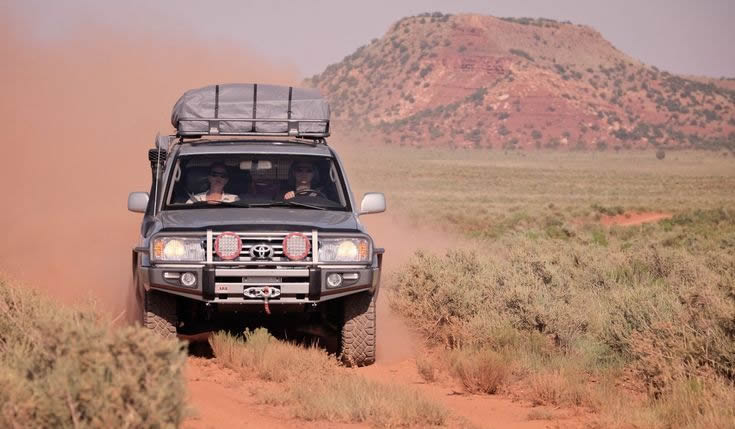
Vehicle choice: A 4×4 (Toyota RAV4, Land Cruiser Prado, or Rav4-style SUV) is essential once you leave paved roads — national parks like Akagera, Bwindi, Queen Elizabeth, and Volcanoes National Park have rough, muddy, or steep tracks, especially in rainy season. Rental companies in Kigali and Kampala/Entebbe typically offer both self-drive and driver-guide options, with rates varying by vehicle size, season, and whether a rooftop tent or camping gear is included.
Cross-border considerations: Driving your own rental between Rwanda and Uganda is possible but requires planning:
- Confirm the rental company permits cross-border travel (many require prior written authorization and charge an extra fee)
- Carry the vehicle’s logbook, insurance documents (COMESA yellow card for regional third-party insurance), and your passport/visa
- The East African Tourist Visa (covering Rwanda, Uganda, and Kenya) simplifies entry if you’re visiting multiple countries
- Border crossings like Gatuna/Katuna or Cyanika are common routes between the two countries
Gorilla trekking logistics: Self-drive works well for reaching Volcanoes National Park (Rwanda) or Bwindi Impenetrable Forest (Uganda), but permits must be booked well in advance directly through Rwanda Development Board or Uganda Wildlife Authority, or via a tour operator, since availability is limited and prices are high. Roads to trekking headquarters can be steep and rutted, so a sturdy 4×4 with good clearance is recommended, particularly around Bwindi’s sectors.
Practical tips: Always carry extra fuel and cash for remote areas, download offline maps, and check park entry fees and vehicle permits separately from gorilla trekking permits, as these are billed independently.