- admin
- April 17, 2026
- Gorillas and Primates
🦍 Gorilla Trekking, Gorilla Safaris & Wildlife Safaris in Rwanda: A Complete Guide to Rwanda Safari Holidays.
Rwanda — the “Land of a Thousand Hills” — has risen to become one of Africa’s most celebrated wildlife destinations. Despite being one of the continent’s smallest countries, it packs an extraordinary concentration of biodiversity, with world-class encounters ranging from mountain gorilla trekking to Big Five savannah safaris.
Gorilla Trekking in Rwanda
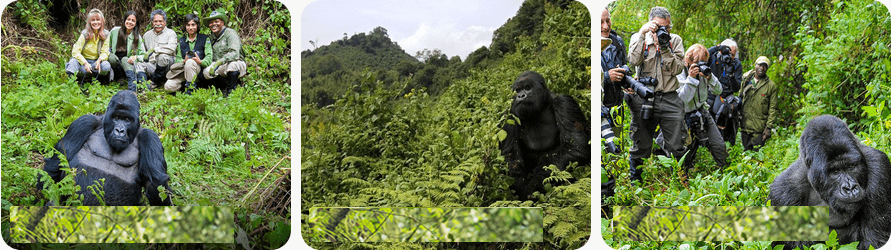
Overview; Gorilla trekking in Rwanda is widely regarded as one of the most profound wildlife experiences on Earth. Encounters with gorillas as they go about their daily lives are carefully managed, with expert trackers and guides leading small groups of tourists up bamboo-covered slopes to spend a precious, awe-inspiring hour just a few feet away from these gentle creatures.
Volcanoes National Park, lying in the far northwest of Rwanda, is a paradise inhabiting the steep slopes of the magnificent Virunga range and is home to the endangered mountain gorilla. The park achieved international recognition through the groundbreaking efforts of primatologist Dian Fossey, whose studies on mountain gorillas in the 1960s attracted worldwide focus on the species.
The Gorilla Families
There are twelve fully habituated gorilla families living in Volcanoes National Park, with a few others habituated solely for scientific research. The groups, or troops, consist of at least one silverback along with several females and youngsters. The troops are somewhat fluid in composition but tend to stick to a preferred area. They are constantly monitored and protected by park rangers, with each group coming into contact with tourists for a strict maximum of one hour per day. The families are known as Susa, Igisha, Karisimbi, Sabyinyo, Amahoro, Agashya, Kwitonda, Umubano, Hirwa, Bwenge, Ugyenda, and Muhoza.
Rwanda’s biggest mountain gorilla group is the Kwitonda family, with 35 members. Previously, the Susa group was the largest, but they have split into three smaller groups. The Susa inhabit the lower base of Mount Karisimbi and are one of the more difficult groups to trek. The Bwenge family near Mount Visoke offers a relatively easy hike, while the Karisimbi, Amahoro, and Kwitonda families are more challenging to track, with Sabyinyo being the nearest and easiest group to reach.
How Many Gorillas Are in Volcanoes National Park?
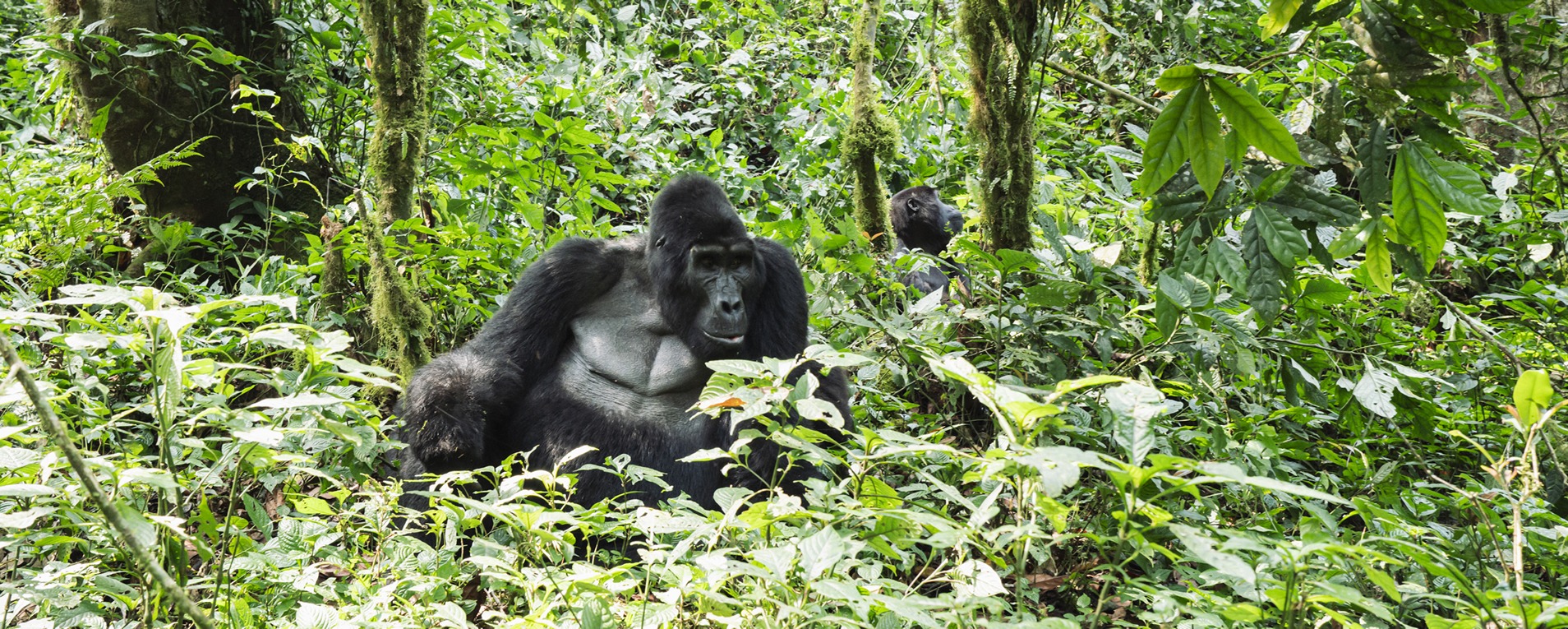
Rwanda is one of only three countries worldwide where you can see mountain gorillas — the world’s largest primate, weighing up to 200kg/441lbs, and among the most endangered, with a global population estimated at around 1,060 individuals as of 2024. Of these, approximately 604 are found in the Virunga Massif — the volcanic range spanning Rwanda, Uganda, and the Democratic Republic of the Congo — with Rwanda’s Volcanoes National Park being the premier trekking destination within this ecosystem. The population is slowly increasing, thanks to concerted efforts between governments, communities, and NGOs.
Stringent conservation initiatives, encompassing anti-poaching strategies and habitat preservation, have facilitated a consistent rise in the mountain gorilla population within the park.
The Trekking Experience: Step by Step
On the day of your scheduled trek, you must present yourself for briefing at the RDB Tourism & Conservation offices at the prefecture offices in Kinigi at 7:00 AM. RDB Tourism & Conservation currently has English and French-speaking trained guides as well as a team of 80 trained gorilla trackers.
Your adventure begins with an early morning briefing at the park headquarters, where you’ll meet your expert guide and receive important information about gorilla trekking etiquette and safety. You then set off on a guided hike through the lush rainforest, following trails that wind through bamboo forests, volcanic slopes, and verdant meadows. The trek can vary in length and difficulty depending on the location of the gorillas — trekkers usually spend between 2 to 6 hours in total, including the time spent with the gorillas.
Hikes up to their various locations can last anywhere from 30 minutes to four or more hours, reaching an altitude of between 2,500m and 4,000m. Porters are available to carry backpacks and cameras, as well as to offer a helping hand along the route.
Key rules during the encounter:
Visitors are asked to maintain a distance of 7 meters (about 22 feet) from the gorillas to minimize possible transmission of human diseases. Viewing time is limited to one hour, with a maximum of 8 visitors per group. Spitting in the park is strictly prohibited, and visitors must keep their voice low and avoid rapid movements that may frighten the gorillas.
Permits & Cost
The Rwanda gorilla permits are issued by the Rwanda Development Board (RDB) for $1,500 per person, granting access to the habituated gorilla families in the park. Due to high demand, booking months in advance is strongly recommended.
With only 96 permits available each day across all families in Rwanda, the encounter is kept intimate and as unobtrusive as possible. Eight tracking permits are issued per troop per day. Discounts are available for Rwandan nationals and East African Community residents.
If you visit between November and May and combine your gorilla trek with stays at both Akagera National Park and Nyungwe Forest National Park (at least two nights across the parks), you can receive a 30% discount on your gorilla permit.
🌍 Why Is Gorilla Trekking in Rwanda More Expensive Than in Other Locations?
Best Time to Trek
Rwanda has two dry seasons: June to September, and December to February. These periods offer the easiest trekking conditions underfoot, though gorilla trekking is available year-round and no trek has ever been cancelled due to rain. Much of your trek will be under forested canopies, so light rain is generally not a concern.
🌍 Why Is Gorilla Trekking in Rwanda More Expensive Than in Other Locations? Gorilla trekking in Rwanda is significantly pricier than in neighboring Uganda ($800 per permit) and the Democratic Republic of Congo ($450 per permit). There are several well-considered reasons for this.
Rwanda’s High-Value, Low-Volume Tourism Strategy; Rwanda has deliberately crafted itself as a premium, luxury tourism destination, targeting high-end travelers willing to pay more for exclusive experiences and superior convenience. This positioning strategy permeates every aspect of the gorilla trekking experience, from permit pricing to accommodation standards and accessibility. Rwanda’s higher permit fees serve multiple purposes beyond revenue generation — they help control tourist volumes, ensuring a more exclusive experience while reducing environmental pressure on gorilla habitats.
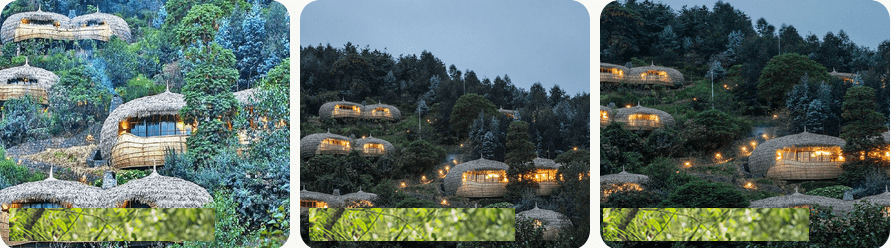
Premium Accommodation Ecosystem; Rwanda has invested in high-end properties around its national parks, each costing more than $700 per person per night. This luxurious approach caters to top-tier tourists but consequently raises the overall cost of a gorilla trekking experience in Rwanda. These properties often include spa services, gourmet dining, cultural experiences, and personalized service that justify their high nightly rates, creating a complete premium experience that extends beyond the actual gorilla encounter.
Superior Accessibility & Infrastructure; Rwanda offers shorter transfers, premium lodge density, and a more centralized tourism structure. The simplicity of Rwanda’s trekking logistics — with all gorilla trekking starting at the single VNP park headquarters in Kinigi — adds perceived value for travelers who prioritize streamlined planning. Kigali International Airport’s efficiency and the country’s compact size make Rwanda particularly attractive for travelers on tight schedules or those combining gorilla trekking with other African destinations. In Uganda, by contrast, it is an 8–10 hour drive from Entebbe Airport to the trekking areas.
Global Marketing & Branding; Rwanda’s extensive international advertising campaigns — exemplified by the ‘Visit Rwanda’ partnership with Arsenal football shirts — contribute to its higher budget for tourism activities and reinforce the country’s global luxury positioning.
Centralized Conservation Funding; A portion of gorilla permit revenue is shared directly with communities surrounding Volcanoes National Park. This revenue-sharing model builds local support for conservation and reduces human-wildlife conflict. Rwanda’s centralized governance model allows for more concentrated investment per trekking sector, which influences pricing.
Fewer Tour Operators & Less Price Competition; Uganda, with a higher number of tour operators, experiences intense competition that results in lower gorilla trekking package prices. In Rwanda, where tour operators are fewer, the lack of competition allows for higher pricing.
Fewer Gorilla Family Groups Open for Tourism; Uganda boasts a larger number of gorilla families open for tourism — 19 compared to Rwanda’s 12 — providing more permit chances and making it a favorable choice for budget travelers.
Endangered Species Conservation Costs; The main underlying reason gorilla trekking is expensive everywhere is that gorillas are endangered animals and they need a lot of funds to protect them from extinction. The financial needs of the mountain gorilla parks are substantial, and a high tariff per gorilla trekker helps the parks cover their costs while keeping trekker numbers low — which is critical since gorillas are susceptible to human diseases, and an overrun park would cause habitat damage.
🐘 Wildlife Safaris in Rwanda
Rwanda’s wildlife offering extends far beyond gorillas, with four outstanding national parks each offering a distinct and extraordinary experience.
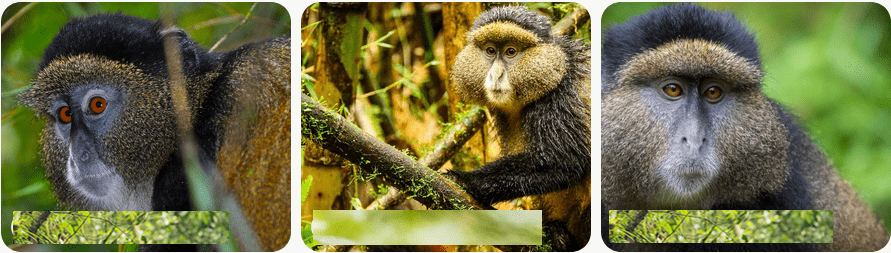
Volcanoes National Park (Northwest Rwanda); Beyond gorillas, the major attractions at Volcanoes National Park include gorilla trekking, golden monkey trekking, hiking to Dian Fossey’s grave, mountain hiking, and touring the Twin Lakes. The park encompasses the summits of five of East Africa’s dormant volcanoes — Mount Karisimbi, Mount Sabinyo, Mount Gahinga, Mount Muhabura, and Mount Bisoke.
Golden monkeys (Cercopithecus kandti), highly social and endemic to the Virunga region, offer a dynamic and entertaining trekking experience. Watching these energetic troops leaping through the bamboo canopy is a perfect complement to the quiet majesty of gorilla observation. In contrast to gorilla trekking, golden monkey tracking is far more affordable and convenient, with identical park rules.
The annual Kwita Izina gorilla-naming ceremony, adopted in 2005 to create awareness of conservation efforts for the endangered mountain gorilla, is a special cultural occasion held at the park, with music, dance, songs, drama, storytelling, food, and drinks accompanying the celebration.
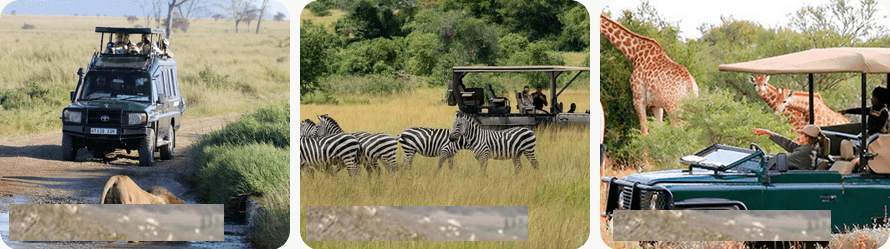
Akagera National Park is one of the oldest national parks on the African continent and the biggest in Rwanda. Following the restoration efforts, the park now records 8,000+ large animals, including Cape Buffalo, African Bush Elephant, Black Eastern Rhinos, Lions, Leopards, Rothschild Giraffes, Hippopotami, Burchell’s Zebras, antelopes, waterbucks, and impala. The park is also home to over 500 species of birds, making it a birder’s haven.
Covering 433 square miles, Akagera welcomes visitors from all walks of life to explore its landscapes without the cars and crowds found in neighboring safari destinations. Walking safaris — traditionally guided by rangers — are an intimate way to become acquainted with the bush, allowing visitors to move silently and tune into subtle sights and sounds.
Wildlife lovers can look forward to morning and evening game drives plus a boat safari on Lake Ihema, inside Akagera National Park.
Nyungwe Forest National Park (Southwest Rwanda).
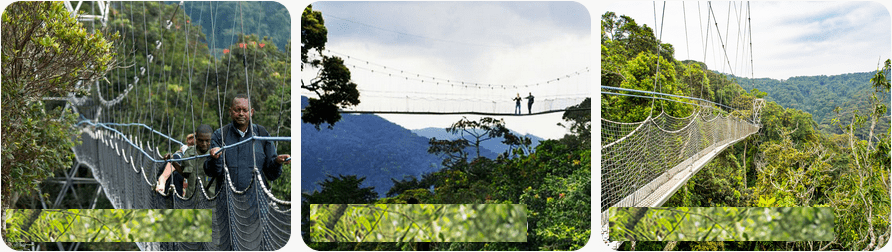
Home to over 13 unique primate species co-existing in one place, Nyungwe National Park is one of Rwanda’s major attractions. Located in the southwestern part of Rwanda, near the Rwanda-Congo border, it was gazetted on a 270 sq. km area in 2004, with a forest cover that remains evergreen all year round. Records show there are about 200 tree species, including bamboo and bogs, and 13 primates including baboons, Hamlyn’s monkeys, grey-cheeked mangabeys, red-tailed monkeys, black-and-white colobus monkeys, silver monkeys, Angola colobus monkeys, and chimpanzees that rule the jungle.
With 322 different bird species recorded, Nyungwe forest is Rwanda’s top birding safari destination. Its diverse habitats — including dense rainforest, grasslands, bamboo-forested slopes, and swampy wetlands — support rich birdlife. Notable species include the Red-collared hornbill, Grauer’s warbler, Handsome Francolin, Rwenzori Nightjar, and Kungwe Apalis among others.
The famous canopy walkway is a highlight — a suspension bridge offering bird’s-eye views of the ancient forest that is unlike anything else in East Africa.
Gishwati-Mukura National Park (Western Rwanda)
Gishwati-Mukura, Rwanda’s newest and smallest national park, established in 2019, is home to a troop of 20 chimpanzees, golden monkeys, and over 230 bird species including the Albertine Rift endemics and forest specialists. It is a good destination for those looking to take part in community projects and improve local livelihoods, as there are many programs visitors can participate in during their visit.
Best Time for Wildlife Safaris in Rwanda
The dry seasons — from June to September and December to February — are the best times to visit Rwanda for wildlife safaris. During these months, the weather is generally stable, making it easier to access the parks and enjoy comfortable trekking conditions. The dry season also offers better visibility for wildlife spotting, particularly in savannah areas like Akagera. The wet seasons, from March to May and October to November, bring lush vegetation and vibrant landscapes and are ideal for birdwatching, as migratory birds are present.
Summary: Rwanda as a Safari Destination
Rwanda is arguably Africa’s most remarkable wildlife compact. In a single trip, visitors can track endangered mountain gorillas through misty volcanic forests, search for the Big Five on open savannahs, follow chimpanzees through ancient rainforest canopies, walk a treetop bridge over one of the continent’s most biodiverse jungles, and spot over 700 bird species. It has become one of Africa’s most popular wildlife destinations, with its pristine landscapes, excellent infrastructure, and a powerful conservation story to tell. Whether you’re a hardcore wildlife enthusiast or a first-time safari-goer, Rwanda delivers an experience that is both intimate and unforgettable.