
- admin
- June 12, 2026
- Safaris and Holidays
Fuel & Road Safety Tips for Rwanda: A Comprehensive Driver’s Guide
Rwanda punches far above its weight when it comes to road infrastructure for an East African nation. The highways are well-paved, the signage is clear, and the country’s compact size makes it feel accessible. But “accessible” should not be confused with “easy.” The Land of a Thousand Hills is topographically demanding, its weather is unpredictable, and — critically for anyone venturing beyond Kigali — fuel stations can disappear for long, lonely stretches of road. Know the rules before you leave the city, and know where to fill up before the gauge starts dropping.
The Fuel Landscape: What You’re Working With
Fuel stations are readily available in cities and along major highways. However, if you plan to drive in rural areas, fill up your tank before leaving urban centres. Both petrol and diesel are available, but some remote areas may have limited fuel supplies.
Fuel stations are widely available in cities but can be sparse in remote regions, so plan refuelling stops accordingly. The reassuring part: fuel prices are regulated nationally, so rates are consistent across the country — you won’t be gouged at a remote pump just because you’re desperate.
The major brands operating across Rwanda are Rubis, TotalEnergies, and Engen. Kigali has an abundance of petrol stations — Rubis, TotalEnergies, and Engen are the most common — and you should always depart the city with a full tank. This is not merely good advice; it is the foundational rule of driving in Rwanda. Whatever your destination, leave Kigali full.
The Nyungwe Problem: Fuel Scarcity in the Southwest
Nyungwe Forest National Park is one of Africa’s most remarkable montane rainforests — 1,020 square kilometres of ancient canopy, chimpanzee troops, and more than 300 bird species. It sits in Rwanda’s far southwest, and getting there means driving deep into a region where fuel infrastructure noticeably thins out.
Stations are sparse near Nyungwe Forest and within park boundaries. Always fill your tank before entering any national park or remote highland area.
The town to know is Huye, also called Butare, located roughly 130 km south of Kigali. When heading towards Nyungwe Forest National Park, Huye (Butare) is your last reliable fuel stop before entering the park area. This is not a suggestion to consider — it is a hard rule for anyone driving this route. From Huye, the road south towards Nyungwe climbs into increasingly remote highland terrain. You will pass through Kitabi and approach the park boundary on the RN2, and there is no guarantee of finding a functioning station after you leave Huye’s town centre.
Fuel is very scarce on this route south of Huye. Fill your tank completely in Huye before departure. A 4WD is strongly recommended, especially during the wet season when the mountain approaches can become genuinely slippery.
The practical implication: if you are departing Kigali for Nyungwe, you have two opportunities to top up — once leaving Kigali, and decisively again in Huye. Do not skip the second stop even if your tank reads three-quarters full. The mountain roads between Huye and Nyungwe, combined with the steep terrain inside the park itself, will consume fuel faster than a flat highway would.
Akagera and Other Parks: The Same Logic Applies
The fuel-scarcity principle is not unique to Nyungwe. There are no fuel stations inside any of Rwanda’s national parks, so a full tank before entering any park is an absolute must.
For Akagera National Park in the northeast: the road to Akagera National Park has limited refuelling options beyond Kayonza town, so topping up there is essential. Kayonza is your last reliable stop before the Akagera turn-off — treat it the same way you would treat Huye on the Nyungwe route.
For Volcanoes National Park in the north, the RN1 from Kigali to Musanze is a well-maintained corridor with reasonably regular fuel access, but fill up in Musanze (Ruhengeri) before heading into the park approach roads.
Make it a habit to fill your tank completely whenever you pass a fuel station on a long route rather than waiting until the gauge drops low. Keeping a mental note of your last fuel stop and the distance to the next one is a simple habit that prevents avoidable headaches in the field.
Strategic Fuelling: The Proactive Mindset
The mistake most drivers make in Rwanda is reactive fuelling — waiting until the low-fuel warning light illuminates before looking for a station. On Kigali’s city streets, that habit is manageable. On the mountain roads approaching Nyungwe at dusk, it is genuinely dangerous.
Adopt a rule of thumb: fill up at every opportunity once you are south of Huye or east of Kayonza. This means stopping at any functioning station you pass, even if your tank is at 60 or 70 percent. The extra five minutes at the pump is far preferable to the alternative.
Planning your refuelling schedule as carefully as your route and tracking tank levels proactively rather than reactively prevents the costly mistake of running low in a remote area where premium pricing or jerry-can reselling may be the only options.
Carry a lightweight approved jerry can if your itinerary takes you deep into remote areas, particularly if you plan extended game drives or off-road exploration within Nyungwe. Five extra litres of emergency fuel is cheap insurance.
Road Conditions: What the Hills Actually Mean
Rwanda’s topography is not decorative — it has real consequences for fuel consumption, tyre wear, and braking demands. Roads in remote areas, such as Nyungwe Forest, Akagera National Park, and Volcanoes National Park, are often gravel or dirt roads. A 4×4 vehicle is highly recommended for national park visits and rural road trips, especially during the rainy season.
Landslides and potholes can be common in hilly regions after heavy rains. The Nyungwe approach roads in particular — steep, narrow, and subject to run-off during rain — can deteriorate quickly between dry-season inspections and wet-season reality. Never assume that a road that was passable on your last visit is in the same condition today.
During the rainy season, many side roads are passable only with four-wheel drive vehicles. Rwanda’s two wet seasons — March to May (long rains) and October to December (short rains) — are the periods when these rules matter most. If your visit falls in these windows, a 4WD is not a luxury; it is the minimum sensible vehicle for anything beyond the main highways.
For fuel efficiency on mountain terrain: unpaved tracks inside parks require lower speeds and higher engine effort, both of which increase consumption significantly. Whenever possible, plan your routes to take advantage of downhill sections by maintaining momentum rather than braking and re-accelerating unnecessarily.
Traffic Laws: The Framework You Must Know
Rwanda’s road rules are not advisory — they are enforced, with cameras on major routes and police checkpoints throughout the country.
Speed limits: the speed limit in urban areas is generally 40 km/h, while on highways it ranges from 60 to 80 km/h. Inside national parks and on remote highland roads, treat those limits as maximums, not targets — conditions will often demand considerably less.
Seatbelts: Wearing seatbelts is mandatory for both drivers and passengers.
Alcohol: Rwanda has a strict policy on drunk driving, with the legal blood alcohol concentration (BAC) limit set at 0.08%. Violators face heavy penalties, including fines and license suspension.
Mobile phones: Using a mobile phone while driving is prohibited unless you have a hands-free device.
Children: children under 12 years old are not allowed to sit in the front seat.
Police checkpoints: you may be stopped at police roadblocks throughout the country, where your vehicle and luggage may be searched. Carry all your documentation — driving licence, vehicle registration, and insurance — at all times and have them accessible.
Night Driving: A Special Caution
Night driving should be avoided when possible, particularly outside Kigali, as rural roads may lack sufficient lighting. This is one of those tips that sounds optional until you are on a winding mountain road in the dark with no road markings, no streetlights, and pedestrians walking on the tarmac edge.
Aim to complete all driving by late afternoon. On the Nyungwe route specifically, plan your schedule so you arrive at your lodge before sunset. The road conditions that are merely challenging in daylight become genuinely hazardous after dark — and if you run low on fuel on a remote stretch at night, your options are dramatically reduced.
The Human Element: Pedestrians, Cyclists, and Moto-Taxis
Rwanda’s rural roads are often shared by pedestrians, cyclists, and animals. In particular, be aware of goats, cows, donkeys, and dogs roaming freely on the roads. While driving in villages or near national parks like Akagera National Park or Nyungwe Forest, always drive slowly and expect the unexpected.
In towns and trading centres along the Nyungwe route — particularly around Gikongoro (Nyamagabe) and smaller market villages — market-day traffic can slow progress significantly. Factor this into your fuelling and departure schedule, especially if you are aiming to reach the park before afternoon rains.
Motorbike taxis are widely used in Rwanda and are known for weaving through traffic. Always check for approaching motorbikes before changing lanes or making turns. Be cautious at roundabouts and intersections, as motorbike taxis often move unpredictably.
Practical Pre-Departure Checklist
Before leaving Kigali for Nyungwe or any remote destination:
Before starting any journey in Rwanda, especially in remote areas, conduct a basic vehicle check: check tyre pressure and tread; verify that all lights — headlights, brake lights, turn signals — are working properly; test the brakes to ensure they are responsive; and keep the fuel tank topped up.
Carry a spare tyre and basic repair tools, as roadside assistance may not be readily available in remote areas.
Download offline maps. Google Maps and Maps.me both work well in Rwanda. Download offline maps for your entire route before departure, as the signal can drop in remote areas and within forest zones.
Inform your lodge or tour operator of your travel plans and estimated arrival times. This ensures assistance in case of delays or breakdowns.
The Golden Rule, Restated
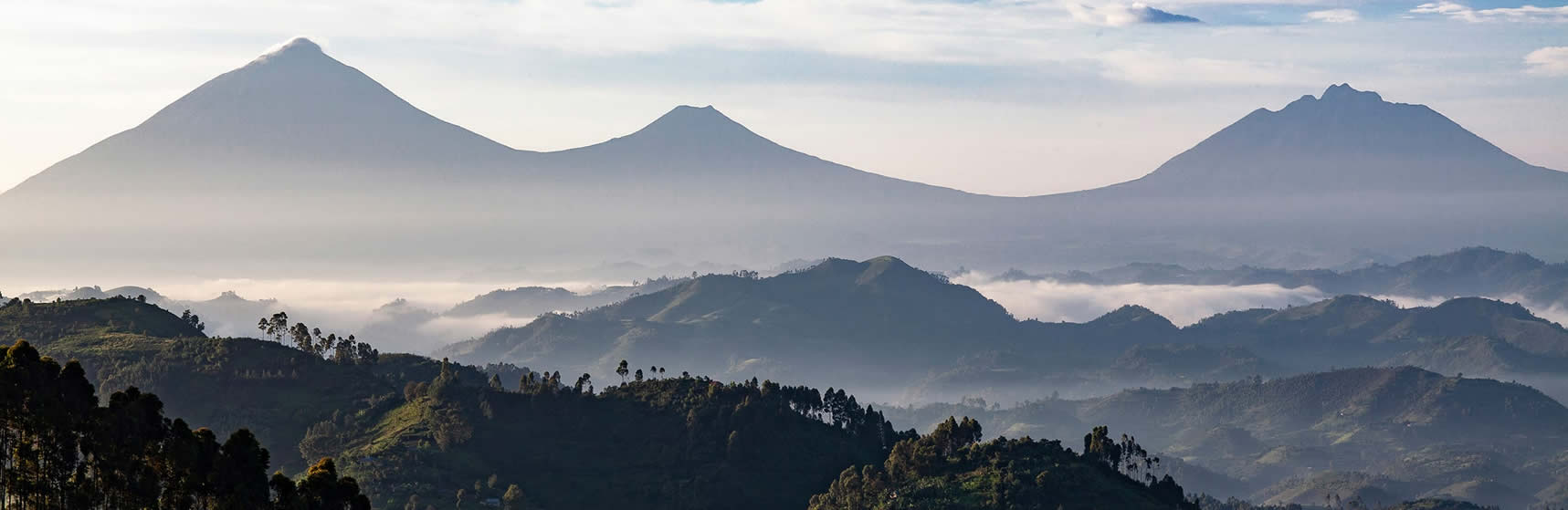
Rwanda rewards prepared drivers with some of the most scenic road travel in Africa. The highways between Kigali and the parks are genuinely beautiful — terraced hillsides, tea plantations, mist-covered ridges, and communities that make every kilometre feel purposeful. But the country does not forgive careless preparation.
Fill up in Kigali. Fill up again in Huye before heading to Nyungwe, and in Kayonza before heading to Akagera. Make it a habit to fill your tank whenever you pass a fuel station on a long route, rather than waiting until the gauge drops low. Respect the speed limits, avoid the roads after dark, carry your documents, and take a 4WD if the rains are anywhere near your travel dates. The forest will be worth it.